SSC CHSL typing test 2026: speed, rules, DEO skill test and practice plan
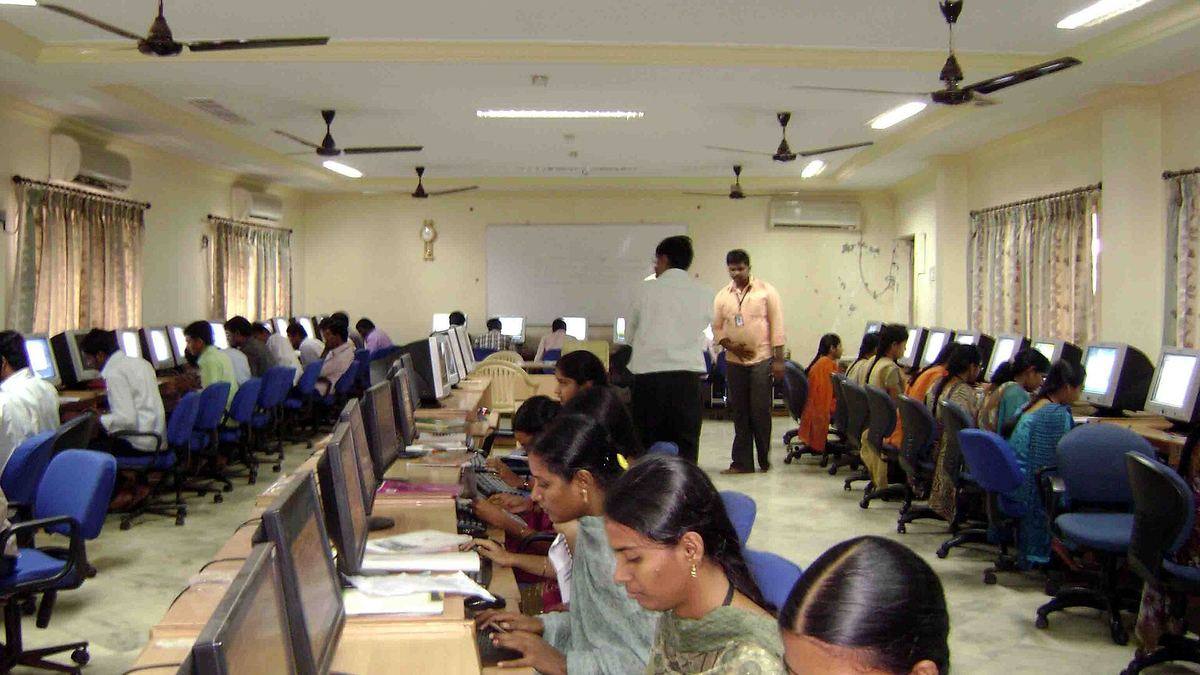
In SSC CHSL 2026, LDC/JSA candidates take a Typing Test: 10 minutes, at 35 words a minute in English or 30 in Hindi, in the medium they chose in the application form. Data Entry Operators take a Skill Test instead: 15 minutes at 8,000 key depressions an hour, or 15,000 for DEO posts in three named offices. Both are qualifying only. They add no marks to your merit, but you must pass to be selected for those posts. Both are held in Session-II of Tier-II, on the same day as the written sections. Below are the rules as the CHSL 2026 notice sets them (Para 13.9.13), what the numbers mean in practice, and a plan to reach the speed in four to six weeks.
The three parts of Section-IV
| Part A: DEO Skill Test | Part B: DEO Skill Test | Part C: Typing Test | |
|---|---|---|---|
| For | DEO / DEO Grade 'A' in the Ministry of Consumer Affairs, Food and Public Distribution, SSC and the Ministry of Culture | DEO / DEO Grade 'A' in all other offices | LDC / JSA |
| Speed | 15,000 key depressions per hour | 8,000 key depressions per hour | 35 wpm English or 30 wpm Hindi |
| Passage | Printed English matter of about 3,700–4,000 key depressions | Printed English matter of about 2,000–2,200 key depressions | A given text passage |
| Time | 15 minutes | 15 minutes | 10 minutes |
| With scribe eligibility | 20 minutes | 20 minutes | 15 minutes |
The passage for the Skill Test may also be shown on screen (Para 13.9.13.6). The Part A offices are the ones named at Para 8.1, which also require Class 12 in Science with Mathematics.
What the speeds mean in practice
The notice gives the conversion itself: 35 wpm is about 10,500 key depressions an hour and 30 wpm about 9,000 (Para 13.9.13.7(iii)). That makes one "word" five key depressions, spaces and punctuation included. The arithmetic:
| Test | Per minute | In the full time |
|---|---|---|
| LDC/JSA English, 35 wpm | 175 key depressions | about 1,750 key depressions (350 words) in 10 minutes |
| LDC/JSA Hindi, 30 wpm | 150 key depressions | about 1,500 key depressions (300 words) in 10 minutes |
| DEO Part B, 8,000 per hour | about 133 key depressions | about 2,000 in 15 minutes, roughly 27 wpm |
| DEO Part A, 15,000 per hour | 250 key depressions | about 3,750 in 15 minutes, roughly 50 wpm |
The passage lengths fit these speeds. Part A is by far the hardest test in CHSL.
The rules from the notice
- Medium is fixed. LDC/JSA candidates chose Hindi or English for the Typing Test in the online form, and no change is allowed later (Para 13.9.13.7(i), (ii)). If you chose Hindi, you practise Hindi. You cannot switch to English to make it easier.
- Hindi is typed in Mangal font only. Typing in any other font means you do not qualify (Para 13.9.13.7(viii)). The notice does not name a keyboard layout, so check SSC's instructions for Tier-II when they come out, and practise in Mangal from the start.
- Speed is judged on accuracy. The Typing Test measures speed on the accurate typing of the given passage (Para 13.9.13.7(iv)). The Skill Test counts correct entry of words or key depressions, and errors are worked out to two decimal places (Paras 13.9.13.4, 13.9.13.6). Both are evaluated by SSC's evaluation guidelines published on its website (Para 13.9.13.3). Read those guidelines for the exact allowed errors; we do not quote a figure here.
- Qualifying, not scoring. The tests are qualifying (Para 13.9.13.2). The final merit uses Tier-II Sections I and II only, provided you also qualify in Sections III and IV (Para 17.9).
- Compensatory time. Candidates eligible for a scribe under Paras 7.1–7.3 get 5 extra minutes. Visually impaired candidates who opted for a scribe get a Passage Dictator, who reads the passage out within the time (Para 13.9.13.7(vi)).
Who is exempt
- Skill Test (DEO): nobody. It is mandatory, and no candidate is exempted (Para 13.9.13.6(i)).
- Typing Test (LDC/JSA): a candidate with a disability who is otherwise qualified, and who is certified by the Civil Surgeon of a Government health care institution as unable to type, may be exempted. You need the Annexure-XIII certificate, plus the medical certificate in the Annexure-XI or XII format at the time of the Typing Test. The exemption covers only a physical disability that permanently prevents typing, not visual or hearing impairment (Para 13.9.13.7(vii)).
How to measure your speed
Do this once now, then every few days.
- Take a 300–400-word passage in plain prose, such as a government press release or a newspaper editorial, in your chosen language.
- Set a timer for 10 minutes (15 if you are a DEO candidate) and type it. Do not look at the keyboard. Do not stop to fix every mistake.
- Count the key depressions you typed, including spaces. Most word processors show a character count with spaces.
- Count your errors: missing, extra or wrong words.
- Gross speed = key depressions ÷ 5 ÷ minutes. Net speed: take the words you typed wrongly away from the total words before dividing.
Worked example: in 10 minutes you type 1,600 key depressions. 1,600 ÷ 5 = 320 words; 320 ÷ 10 = 32 wpm gross. If 12 words were wrong, the net is (320 − 12) ÷ 10 = 30.8 wpm. That is short of 35 in English, but already enough for 30 in Hindi.
A 4–6 week plan to reach 35 wpm (or 30 in Hindi)
Practise 30–45 minutes a day alongside your Tier-I study, ideally in two short sessions.
| Week | Focus | Target |
|---|---|---|
| 1 | Posture, home row, all ten fingers. Slow drills of letter groups; look only at the screen. | Correct fingering; any speed |
| 2 | Common words and short sentences. Three-minute timed runs, accuracy first. | 20–25 wpm with few errors |
| 3 | Full paragraphs with numbers, capitals and punctuation. One 10-minute test every other day. | 25–30 wpm |
| 4 | Government-style text: reports, notices, editorials. A 10-minute test every day; write down gross and net speed. | 30–35 wpm (Hindi: 27–30) |
| 5–6 | Exam conditions: an unfamiliar passage, a different computer if you can, no backspace habit. Drill the words you keep getting wrong. | 38–40 wpm, to give a margin |
- Do not chase speed before your accuracy is steady. Errors are what make a candidate fail.
- Hindi typists: set up Mangal on day one, and learn the half-letters and matras of your layout early; they are where most errors come from.
- DEO candidates for Part A need about 50 wpm. Plan on the full six weeks or more, and test at 15 minutes.
- If you reach the target by week 4, keep up 15 minutes a day so you don't lose it before Tier-II.
Tier-II dates are not announced yet, but it follows Tier-I. Starting typing practice now means it is ready when Tier-II comes. Meanwhile, the 10 free SSC CHSL Tier-I mocks cover the written side, and the Tier-II exam pattern explains where Section-IV fits in the day.
Useful links
- SSC CHSL 2026 notice (PDF, ssc.gov.in), Para 13.9.13
- SSC website: evaluation guidelines and updates (ssc.gov.in)
- Free SSC CHSL mock tests
- SSC CHSL syllabus
- SSC CHSL 2026: exam date, pattern and how to apply
- SSC CHSL Tier-II exam pattern
- LDC, JSA and DEO posts in SSC CHSL
Frequently asked questions
What is the typing speed required for SSC CHSL?
35 words a minute in English or 30 in Hindi for LDC/JSA, in a 10-minute test. The notice equates these with about 10,500 and 9,000 key depressions an hour.
Is the SSC CHSL typing test qualifying?
Yes. It adds no marks to the merit, which comes from Tier-II Sections I and II, but you must pass it to be selected for LDC/JSA.
Can I change my typing test medium from Hindi to English?
No. The medium chosen in the application form is final, as the notice says.
Which font is used for the Hindi typing test in SSC CHSL?
Mangal only. Typing in another font means you do not qualify.
What is the DEO skill test speed in SSC CHSL?
8,000 key depressions an hour in 15 minutes for most DEO posts, and 15,000 an hour for DEO posts in the Ministry of Consumer Affairs, Food and Public Distribution, SSC and the Ministry of Culture.
Can I learn typing for SSC CHSL in one month?
It depends on where you start. Measure your speed now: from 20–25 wpm, a month of daily practice is a sensible plan; from scratch, allow the full six weeks or more.